How to Request a Sample from a Footwear Manufacturer — and What to Check When It Arrives
The sampling process makes or breaks manufacturing partnerships. Here is how to get it right from the first brief.
5 min read
Nov 6, 2025
The sampling process is one of the most important stages of any manufacturing partnership. It is where you discover whether a manufacturer can actually deliver what they have promised. It is also where most brands make avoidable mistakes that slow down the development process and create problems further down the line.
This guide covers how to request a sample effectively, what information to include in your brief, and what to assess when the sample arrives.
Why Sampling Matters
The sample is your quality benchmark. Everything that goes into production will be assessed against it. If the sample is wrong and you approve it without catching the issues, those issues will be in every pair of your production run.
Sampling is also where you learn the most about your manufacturing partner. How they handle your brief, how quickly they respond to feedback, how accurately they interpret your specifications, and how they communicate throughout the process — all of this tells you more about the partnership than any sales conversation.
How to Write a Good Brief
The quality of your sample depends significantly on the quality of your brief. A vague brief produces a vague sample. A detailed brief gives the manufacturer what they need to get close to your vision on the first attempt.
A good sampling brief should include the following.
Style reference — either a sketch, a reference image, or a physical sample of a similar product. The more visual information you provide, the better.
Construction type — what type of construction do you want? California construction, cement construction, stitchdown, Blake, Goodyear welt — each has different properties and implications for cost, comfort, and durability.
Materials — be as specific as possible. If you want full-grain leather, specify the finish, the colour, and if possible a material reference. If you are open to synthetic alternatives, say so. If you have specific requirements around sustainability credentials like LWG certification, state them upfront.
Last — the last is the mould around which the shoe is built. It determines the fit, the toe shape, and the overall silhouette. If you have a preferred last or a fit reference, include it. If you are relying on the manufacturer's standard last range, ask to see what is available before the brief is submitted.
Heel height and sole specification — be precise. A 70mm heel and a 75mm heel are meaningfully different. A TPR sole and a PU sole have different weight, flexibility, and durability characteristics.
Sizing — specify the size you want the sample made in and whether you need multiple sizes for a fit assessment.
Target retail price — sharing your target price helps the manufacturer make informed material and construction choices. It also avoids the situation where a perfect sample comes back at a cost that does not work for your margin.
What to Expect During Development
Once you submit your brief, a good manufacturer will come back with questions — material options, construction recommendations, timeline confirmation. This back-and-forth is normal and healthy. A manufacturer who accepts your brief without questions and disappears for three weeks is a concern.
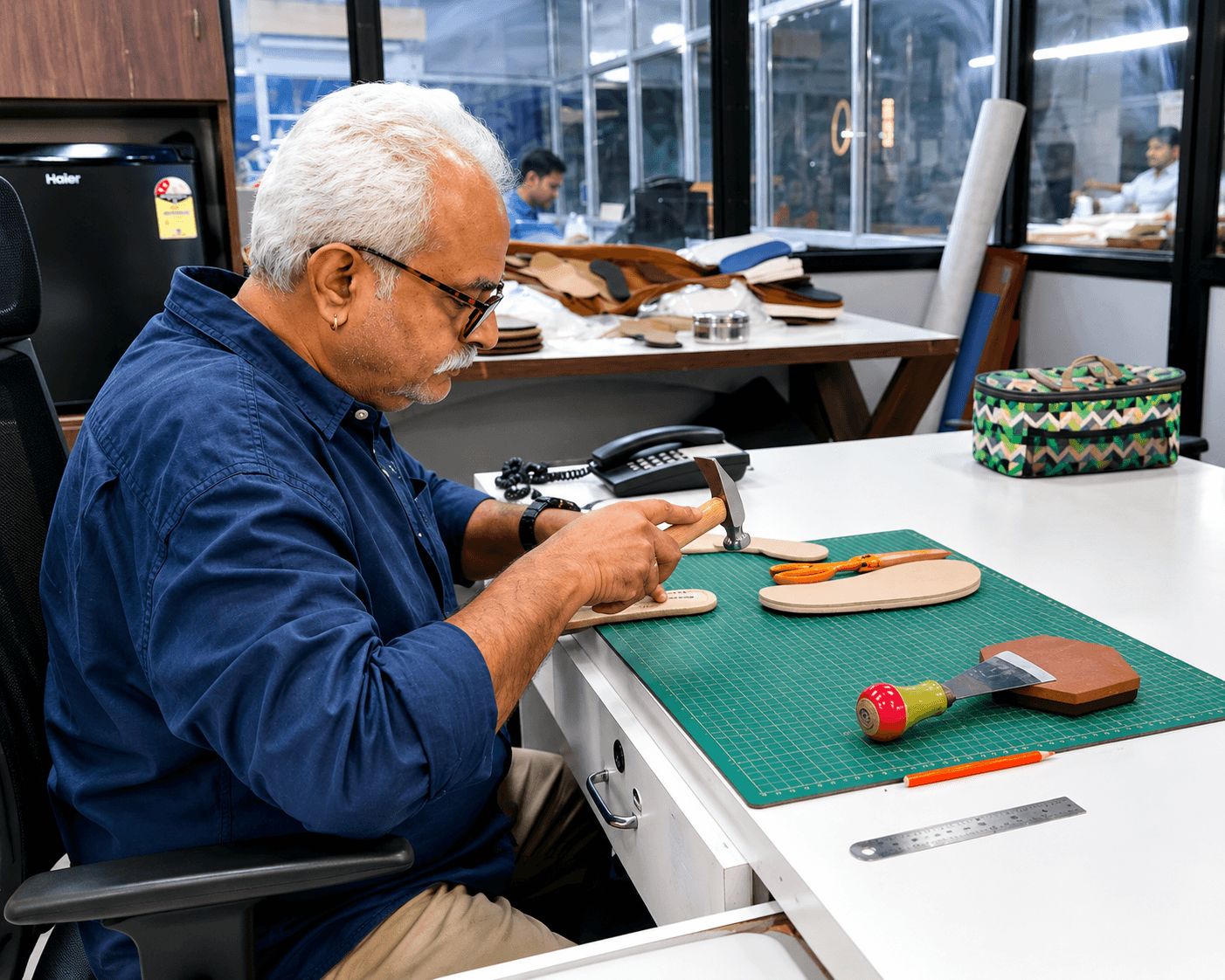
Development timelines vary by complexity but a competent manufacturer with in-house development capability should be able to deliver a first sample within 21 days of a confirmed brief. More complex constructions or custom material development may take longer. Ask for a specific timeline before development begins and hold them to it.
What to Check When the Sample Arrives
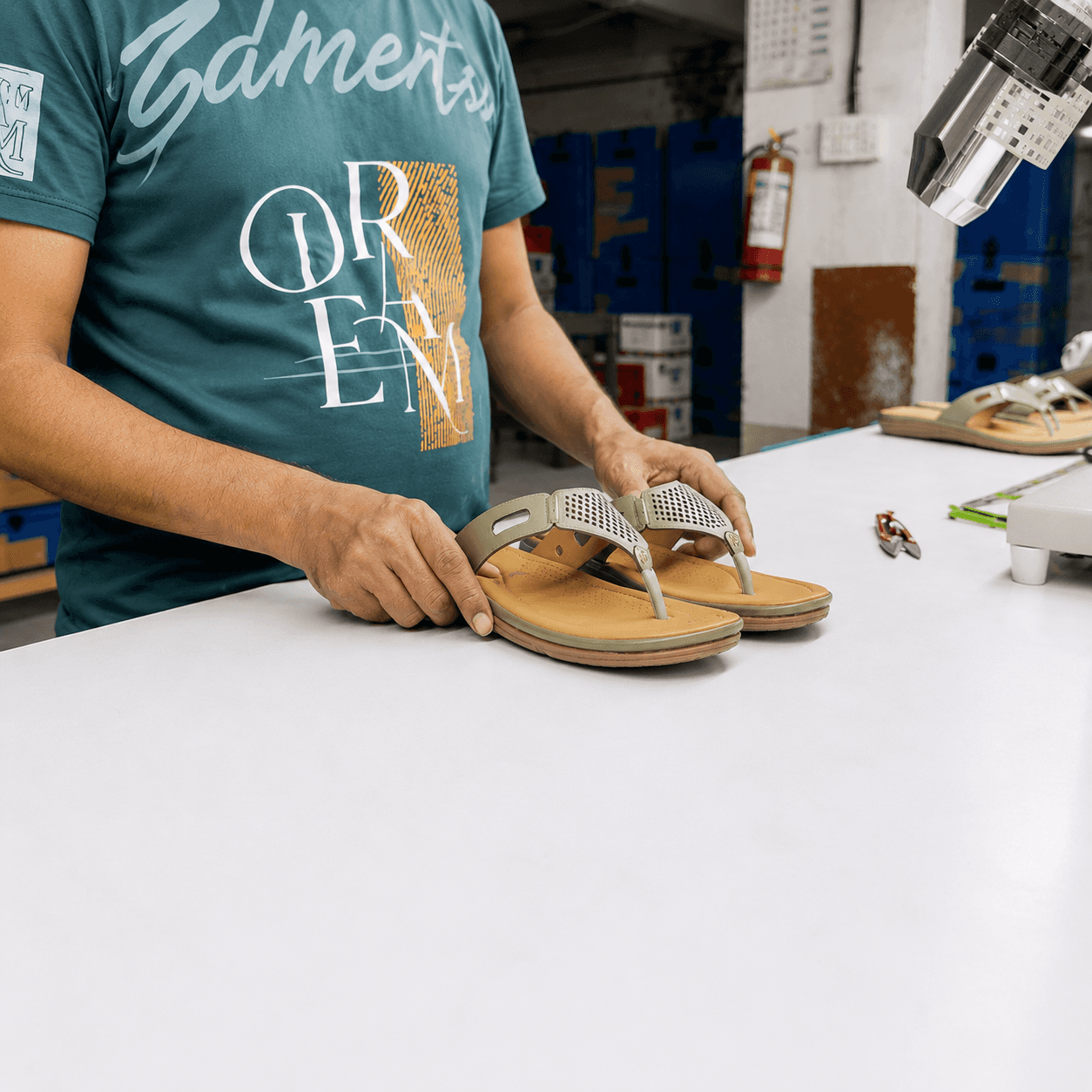
When the sample arrives, assess it systematically. Do not just look at it — wear it, flex it, examine every detail.
Fit and last — does the fit match your expectation? Is the toe shape right? Is the heel position correct? If you have a fit model, put it on them.
Materials — does the leather or material match your specification? Is the grain, finish, and colour what you asked for? Check the material against your reference under natural light.
Construction — examine the sole bonding. Press on the sole at the edges — there should be no separation or gaps. Check the stitching if applicable — it should be even, tight, and consistent.
Finishing — look at the edges of the upper, the heel cap, the insole, and the lining. Premium finishing is in the details. Rough edges, uneven lining, or poorly finished heel caps are signs of a quality control process that needs improvement.
Comfort — if it is a comfort-oriented construction, wear the sample for at least 30 minutes. A shoe that is uncomfortable in a sample will be uncomfortable in production.
Weight — is the shoe the right weight for its intended use? A sandal that is too heavy or a heel that is too light will feel wrong to the end consumer.
How to Give Feedback
Good feedback is specific. Do not tell your manufacturer the sample is wrong — tell them exactly what is wrong and what you want instead.
Document every issue with photographs. Mark up images with annotations where possible. Reference specific measurements where they matter. Give a clear indication of priority — what must change before you approve, and what is a preference rather than a requirement.
Set a clear timeline for the revision and confirm it in writing before the sample goes back for correction.
When to Approve
Approve the sample when you are genuinely satisfied that it represents the product you want in production — not when you are tired of the development process. Approving a sample with known issues is one of the most common causes of production problems and one of the most avoidable.
Once you approve, everything in the approved sample becomes the benchmark for your production run. Make sure it is a benchmark you are proud of.
At Orchid Shoes
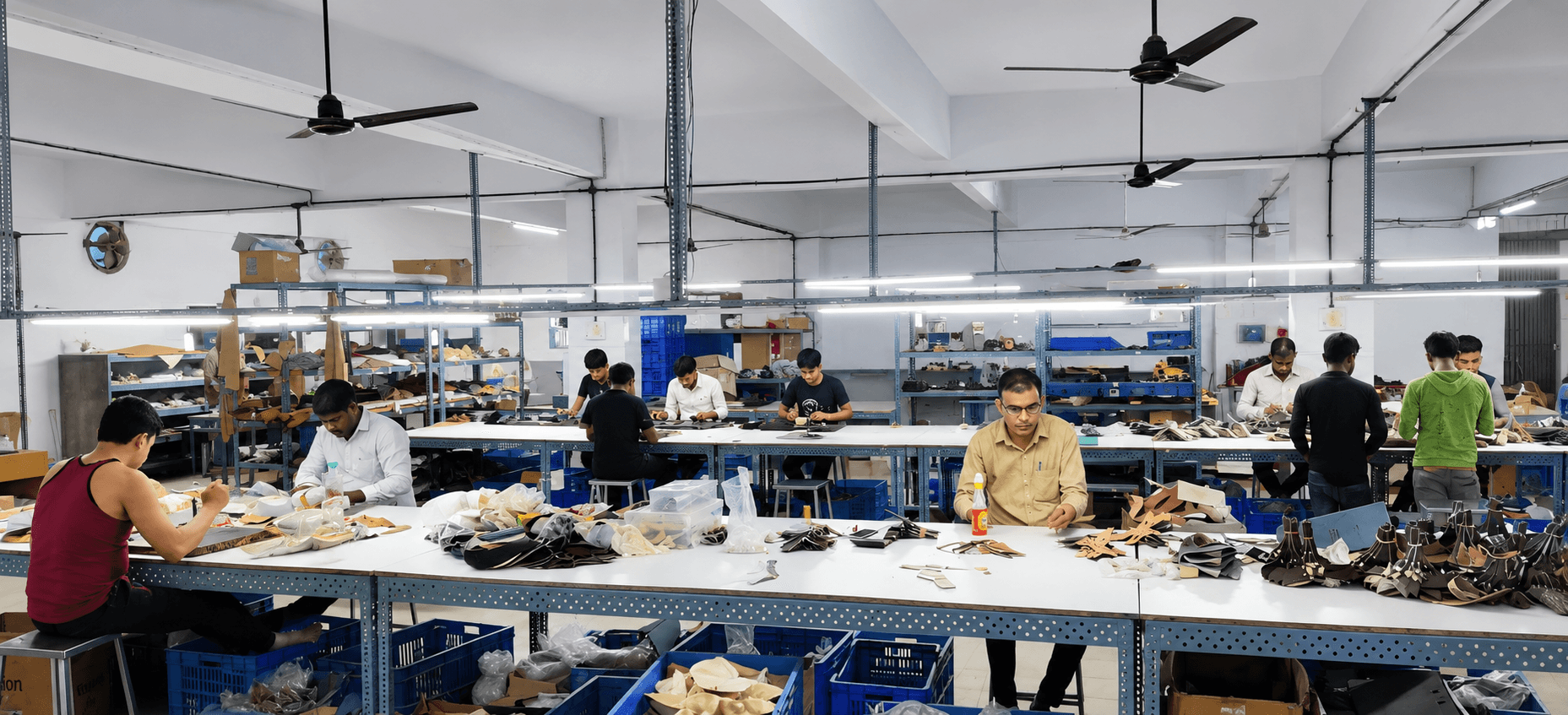
Most brands have their first sample in hand within 21 days of submitting a confirmed brief. Our in-house sole and footbed development means we control the full development process without outsourcing critical components. Every sample goes through a fit assessment, a construction review, and a material check before it leaves our facility. And we stay in communication throughout — so you always know where your sample is and when to expect it.
If you are ready to start a sampling conversation, get in touch. We will take it from there.